Showing posts with label apple. Show all posts

Monday, August 17, 2009

iPhone SDK


  • Cocoa Touch
    • Multi-touch events and controls
    • Accelerometer support
    • View hierarchy
    • Localization (i18n)
    • Camera support
  • Media
    • OpenAL
    • audio mixing and recording
    • Video playback
    • Image file formats
    • Quartz
    • Core Animation
    • OpenGL ES
  • Core Services
    • Networking
    • Embedded SQLite database
    • Core Location
    • Threads
  • OS X Kernel
    • TCP/IP
    • Sockets
    • Power management
    • File system
    • Security

Java in iPhone

Apple has not announced any plans to enable Java to run on the iPhone. Sun MicrosystemsJava Virtual Machine (JVM) for iPhone OS, based on the Java Platform, Micro Edition version of Java. This would enable Java applications to run on iPhone and iPod Touch. announced plans to release a Soon after the announcement, developers familiar with the SDK's terms of agreement believed that by not allowing 3rd-party applications to run in the background (answer a phone call and still run the application, for example),allowing an application to download code from another source, or allowing an application to interact with a 3rd-party application (Safari with JVM, for example), it could hinder development of the JVM without Apple's cooperation.

It is clear that Java running on the iPhone is outside the bounds of the iPhone SDK Agreement. The guideline in question is rule 3.3.2, which reads: 3.3.2 — An Application may not itself install or launch other executable code by any means, including without limitation through the use of a plug-in architecture, calling other frameworks, other APIs or otherwise. No interpreted code may be downloaded or used in an Application except for code that is interpreted and run by Apple’s Documented APIs and built-in interpreter(s). However, some iPhone users have shown that it was possible to install and use a J2ME stack on an iPhone, though it involved jailbreaking. It has also been revealed that there were talks between Sun and Apple concerning the availability of Java on the iPhone, and that Sun was working in that intent with a company called Innaworks.

Since its required that all ARM9 or later processors include Jazelle support, the iPhone includes the hardware for accelerated Java execution.
It has also been revealed that there were talks between Sun and Apple concerning the availability of Java on the iPhone, and that Sun was working in that intent with a company called Innaworks. Since its required that all ARM9 or later processors include Jazelle support, the iPhone includes the hardware for accelerated Java execution.

Wednesday, August 5, 2009

iPhone Technology

Multi-Touch
With its large Multi-Touch display and innovative software, iPhone lets you control everything using only your fingers. How does it work? A panel underneath the display’s glass cover senses your touch using electrical fields. It then transmits that information to an LCD screen below it. The display also features an oil-resistant coating that keeps the iPhone screen clean.


Accelerometer
iPhone responds to motion using a built-in accelerometer. When you rotate iPhone from portrait to landscape, the accelerometer detects the movement and changes the display accordingly. The accelerometer also gives you amazing game control.

Sensors
When you lift iPhone to your ear, the proximity sensor immediately turns off the display to save power and prevent accidental dialing. The ambient light sensor in iPhone automatically brightens the display when you’re in sunlight or a bright room and dims it in darker places.

Accessories in iPhone

A way to connect:
Apps for iPhone and iPod touch can now communicate with accessories via the dock connector or wirelessly over Bluetooth.Enhance your accessory by developing an iPhone app to extend its functionality, or create entirely new integrated solutions that combine an iPhone app with dedicated hardware. For example, you can display a fully interactive Multi-Touch equalizer for your speaker system. Create an inventory app for your barcode reader. Or, build an app that logs and tracks the readings from an attached heart-rate monitor. The potential solutions are limitless.

Create your own protocol:
As with current Made for iPod accessories, your accessory can use Apple-provided protocols to control music and video playback in the iPod app. With iPhone SDK 3.0, you can also create your own custom protocols to exchange data and commands with your app. Use the new Accessory APIs to allow your app to communicate with and control your accessory.To learn how to add support for iPhone apps in your dock connector or Bluetooth accessory, join the Made for iPod and Works with iPhone Licensing Program and the iPhone Developer Program.

Apple Push Notification service

Apple Push Notification
Apple Push Notification service is to keep users up-to-date. This service will benefit a wide variety of applications. e.g., A sports application can now give key game updates even when the appication isn’t running. A chat application can display the latest response in a conversation. Task management applications can track how many tasks you have yet to approve.

Attention Getter
There are a number of ways to send a push notification. Send a message with text that lets the user launch your app. Trigger audible alerts with your own custom sounds. Add a numbered badge to your app icon when it’s important to let the user know how many things are waiting for them.

Optimization for mobile
The Apple Push Notification service is designed with the mobility needs of iPhone and iPod touch users in mind. Most of the heavy lifting is handled between your servers and ours, so there’s less impact on battery life and performance than there would be if you ran the app in the background. The service maintains a persistent IP connection so that it can notify users even when your app isn’t running. We’ve optimized the service to adapt to all different configurations of mobile networks that the iPhone runs on so you don’t have to.

Monday, August 3, 2009

Map View in iPhone

#import "MatchProfile_MapController.h"
#import "POL.h"

@implementation MatchProfile_MapController
@synthesize intTag1;

- (void)viewDidLoad {

self.navigationItem.title=@"Select Person";
appdelegate=[[UIApplication sharedApplication]delegate];

for(int i=0;i<[appdelegate.arrayRecentCompatible count];i++)
{
NSMutableDictionary *dic=[appdelegate.arrayRecentCompatible objectAtIndex:i];

CLLocationCoordinate2D coord;
coord.latitude =[[dic valueForKey:@"Latitude"] doubleValue];
coord.longitude =[[dic valueForKey:@"Longitude"] doubleValue];

POL *poi = [[POL alloc] initWithCoords:coord];
poi.title =[dic valueForKey:@"Name"];
poi.subtitle =[dic valueForKey:@"Country"];
poi.img1=[UIImage imageNamed:[dic valueForKey:@"Image"]];
poi.intTag=i;
[mapView addAnnotation:poi];
}

mapView.delegate=self;

MKCoordinateRegion zoomIn = mapView.region;
zoomIn.span.latitudeDelta *=5;
[mapView setRegion:zoomIn animated:YES];
[super viewDidLoad];
}
- (MKAnnotationView *) mapView:mapView viewForAnnotation:(id ) annotation
{

newAnnotation = [[MKPinAnnotationView alloc] initWithAnnotation:annotation reuseIdentifier:@""];
[newAnnotation setPinColor:MKPinAnnotationColorGreen];
newAnnotation.animatesDrop = YES;
newAnnotation.canShowCallout = YES;
POL *TempPOL=(POL*) annotation;

UIButton *btnRow1=[[UIButton buttonWithType:UIButtonTypeCustom]retain];
btnRow1.frame=CGRectMake(0, 0, 25, 30);
[btnRow1 setBackgroundImage:TempPOL.img1 forState:UIControlStateNormal];
[btnRow1 addTarget:self action:@selector(selectUSer:) forControlEvents:UIControlEventTouchUpInside];
btnRow1.tag=TempPOL.intTag;
newAnnotation.leftCalloutAccessoryView=btnRow1;

UIButton *btnRow2=[[UIButton buttonWithType:UIButtonTypeDetailDisclosure]retain];
[btnRow2 addTarget:self action:@selector(selectUSer:) forControlEvents:UIControlEventTouchUpInside];
btnRow2.tag=TempPOL.intTag;
newAnnotation.rightCalloutAccessoryView=btnRow2;
return newAnnotation;
}

#pragma mark -
#pragma mark Memory methods

- (void)didReceiveMemoryWarning {
[super didReceiveMemoryWarning];
}

- (void)viewDidUnload {
}

- (void)dealloc {
[super dealloc];
}


#pragma mark -
#pragma mark Methods

-(IBAction)selectUSer:(id)sender
{
if(objProfile==nil)
objProfile=[[ProfileViewController alloc]initWithNibName:@"ProfileViewController" bundle:nil];

for(int i=0;i<4;i++)
{
NSMutableDictionary *dic=[appdelegate.arrayRecentCompatible objectAtIndex:i];

UIButton *btn=(UIButton*)sender;

if(btn.tag==i)
{
objProfile.intPerson=i;
objProfile.strTitle=[dic valueForKey:@"Name"];
}
}

[self.navigationController pushViewController:objProfile animated:YES];
}

@end

364 days left to launch iPhone 4G

Now that the iPhone 3G S is officially behind us, let me be the first--or at least one of the first--to announce the countdown to the next new iPhone. If history is any indication, it should show up right around this time next year.Interestingly, even though the 3G S is technically Apple's third-generation iPhone, some tech pundits were expecting the iPhone 3G S to be called the iPhone 4G. But you could also argue that the iPhone 3G S is more like the iPhone 3.5G, which doesn't have the greatest ring.There's also a chance that in between the iPhone 3G S and iPhone 4G (or whatever it's called), we might see a totally new branch of iPhone, something akin to an iPhone Mini or Lite.I'm not sure Apple needs to answer to the smaller form factor of the Palm Pre, but there are some people out there who think the iPhone's just a tad too big. And there are some people who want a physical keyboard, but don't count on Apple slipping in a slide-out keyboard anytime soon.

All that said, I do think next year's iPhone will feature a new design that also includes a new screen. Some mock-ups floating around have suggested the aluminum unibody design of the new MacBooks. That's possible, but so are a host of other innovative industrial designs.
The point is, the next go-round, it's probably not enough to just stick with upgraded internal components. Some significant cosmetic changes will be required to differentiate the generations and more easily entice upgrades by existing iPod owners. And I'm not talking matte vs. shiny finish.Ultimately, however, it's what's inside that counts and consumers are always wanting faster, more powerful smartphones with more memory that somehow manage to be more energy-efficient and offer better battery life. There's already talk of the next iPhone having a dual-core processor and better graphics chips that can deliver higher video resolutions and better still images when taking pictures (read Brooke Crothers' story on new ARM chips here).The question is whether Apple can continue to increase battery life at the same time. In fact, one big reason a lot of people are interested in upgrading from the 3G to the 3G S is because of the improved battery life.Beyond the hardware, there are still features concerns to address (everybody has their wishlist) and more importantly, carrier and pricing plan issues. Someday, some other carrier, perhaps Verizon, which is preparing to build out a 4G network, will get the iPhone. And someone, maybe Apple, will declare that iPhone the iPhone 4G. Or maybe it'll just be the 3G V. All I know is that come this time next year, we'll most likely be seeing a new iPhone. And it will be here before you know it.

Comments? Aside from a carrier choice, what are looking for in a true 4G iPhone?

Finding and Viewing Locations

For important information about driving and navigating safely, see the Important Product Information Guide.Maps provides street maps, satellite photos, a hybrid view, and street views of locations in many of the world’s countries. You can get detailed driving, public transit, or walking directions and traffic information. Find and track your current (approximate) location, and use your current location to get driving directions to or from another place. The built-in digital compass lets you see which way you’re facing. (iPhone 3GS only).

Note: Maps, digital compass (iPhone 3GS only), directions, and location-based applications provided by Apple depend on data collected and services provided by third parties. These data services are subject to change and may not be available in all geographic areas, resulting in maps, compass headings, directions, or location-based information that may be unavailable, inaccurate, or incomplete. Compare the information provided on iPhone to your surroundings and defer to posted signs to resolve any discrepancies. In order to provide your location, data is collected in a form that doesn’t personally identify you. If you don’t want such data collected, don’t use the feature. Not using this feature won’t impact the non–location-based functionality of your iPhone.

Find a location and see a map:

1. Tap the search field to bring up the keyboard.

2. Type an address, intersection, area, landmark, bookmark, contact, or zip code.

3. Tap Search.

Sunday, August 2, 2009

iPhone 3GS

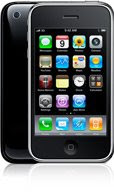
iPhone 3GS is the latest iPhone launched by apple.

If it ain't broke, don't fix it -- right? We know countless reviews of the iPhone 3GS may begin with that cliché, but there's little chance you'd find a better way to describe the strategy that Apple has just put into play with its latest smartphone. In many ways, the 3GS is a mirror image of the iPhone 3G; externally there's no difference. It's inside where all the changes have happened, with Apple issuing a beefed-up CPU, new internal compass, larger capacities for storage, and improved optics for its camera. More to the point, the release of the 3GS coincides with the launch of iPhone OS 3.0, a major jump from previous versions of the system software featuring highly sought after features like cut, copy, and paste, stereo Bluetooth, MMS, tethering, video recording, landscape keyboard options for more applications, and an iPhone version of Spotlight. At a glance, what Apple seems to be doing is less a reinvention of the wheel and more like retreading the wheel it's already got (and what a wheel, right?). So, do the iPhone 3GS and OS 3.0 tweak the details in just the right places, or has Apple gone and gotten lazy on us? Read on to find out.